
Spins Queen and StarX: what to expect
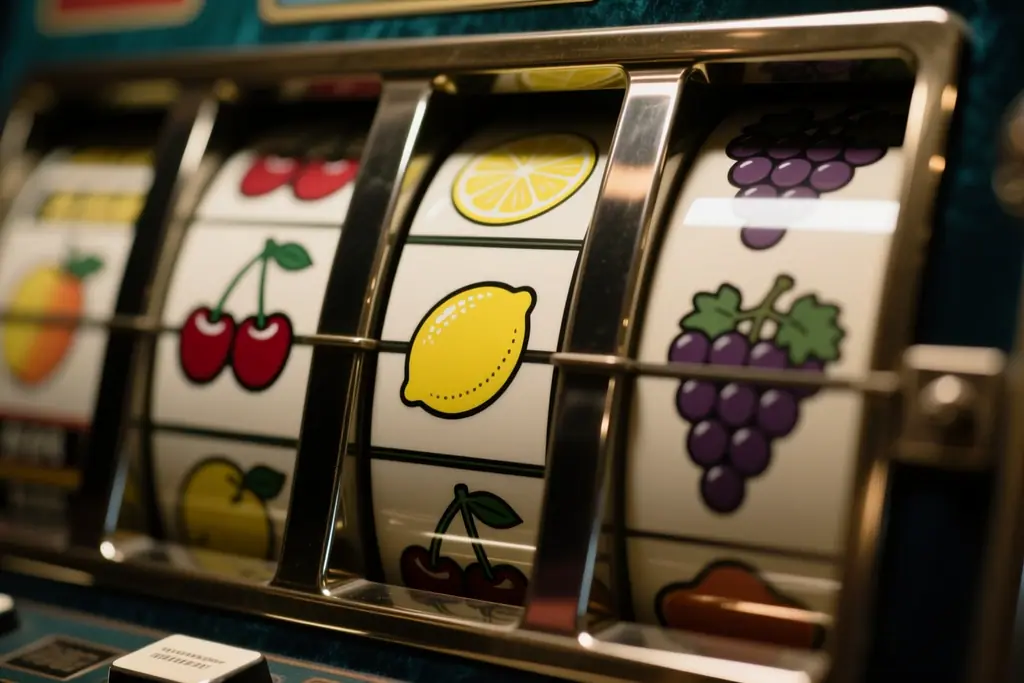
Spins Queen and StarX belong to the busy middle ground between classic slots and crash games. They share the familiar reels of a slot but borrow the fast tempo and the build-up of a crash round. This page describes what each title tends to offer and how to compare two games from the same family.
Spins Queen: theme and layout
Spins Queen is presented as a regal, slot-style game with a crown-and-jewels theme. Like most titles in this family it centres on reels, symbols and a set of features that appear during play. The look is decorative; the important part for a player is the rules screen, which explains how a round proceeds and how features are triggered.
Before playing, check how the round ends. Some slot-style games resolve each spin automatically, while others continue across several phases. Knowing which kind you are opening tells you how much control you actually have, which is often less than the interface suggests.
StarX: a different flavour
StarX takes a space theme and applies the same underlying structure with its own symbols and pacing. Titles in this family typically differ in presentation, symbol sets and feature mix rather than in anything a player can exploit. A game with more features is not more favourable; it is simply busier.
When two games look similar, the honest comparison is about tempo and clarity. Which one explains its rules better? Which one has a pace you can sustain for the length of session you planned? Those answers matter more than the artwork.
Shared elements of the family
- Reels or a grid as the main play area.
- Symbols that form wins in set patterns.
- Features such as multipliers or extra rounds.
- A paytable and rules screen describing the game.
| Element | Spins Queen style | StarX style |
|---|---|---|
| Theme | Regal, jewels and crowns | Space and stars |
| Play area | Reels with symbols | Grid with symbols |
| Pace | Spin-based | Spin-based, faster feel |
| Features | Multiplier-style extras | Feature-driven rounds |
| What to read | The paytable | The rules screen |
How to compare two titles
Open both rules screens side by side and compare how a round is completed, which symbols matter and what the features do. Then decide which of the two you understand better. Understanding is the only real advantage a player has, because the outcome itself is random either way.
Resist the pull of the newest title simply because it is new. A game you know well is easier to budget for than one you are still learning while you play.
Where these games sit in the family
Between a classic slot and a crash game there is a broad middle ground of titles that borrow from both. Spins Queen and StarX belong there: the play area resembles a slot, while the pacing and presentation carry some of the energy of the crash genre.
For a player, the important consequence is that these games often look more interactive than they are. Checking the rules screen tells you how much of each round you actually influence, which is usually less than the interface implies.
Budgeting for a spin-based session
Because such games resolve quickly, they consume a balance in a steady rhythm rather than in dramatic swings. The natural budgeting approach is to fix a stake per round and a total number of rounds, then stop when that number is reached.
If the game offers automatic play, treat it with particular care; automation increases the number of decisions per minute and reduces the chances that you will notice a session drifting past its limit.
Themes are decoration
Crowns, jewels, stars and rockets are presentation. They change how a game feels and how long you might want to watch it, but they have no effect on the underlying mechanics. A beautiful game with a slow, clear explanation of its rules is worth more than an attractive one whose rules are vague.
Choose on clarity and tempo, not on theme. It is a small change in habit that makes a visible difference to how a session feels by the end of it.
Comparing two games from the same family is easier than it sounds. Play each one briefly at a small stake, then ask which rules you understood faster and which tempo you could sustain for your planned session length. The answer usually identifies one game clearly, and the choice then has nothing to do with theme.
If neither game feels right, the correct conclusion is that neither is right for now. Because results are random, no game has an advantage over another from your point of view, so there is no cost in choosing the one that fits your session — and no cost in choosing none of them.
One practical detail is worth checking in any game of this type: whether automatic play is available and, if so, how rounds are counted. A game that can run on its own concentrates decisions into the moment you switch it on, which makes that moment the sensible place to set a limit rather than somewhere in the middle of the run.
Whichever you choose, keep stakes small, read before you play, and remember that no strategy, promo code or prediction can guarantee a win.
Read next
Slot basics: reels, symbols and pays
How a modern slot is built and what each element on the screen means.
Aviator: how the crash round is played
The rising curve, the cash-out button and the risk of waiting too long.
Lucky Jet: mechanics and round flow
How a jet-style crash game runs from take-off to the end of the round.